Driving in Croatia is one of the best ways to explore the country’s most visited attractions and best-kept secrets. One can cruise the coastal route of the Adriatic Sea and enjoy pleasant detours through the quiet countryside. Wherever you go, it is important to understand basic driving rules and safety tips before starting your journey. In this guide, you will find everything there is to know about driving on Croatian roads — rules, speed limits, and practical tips for a trouble-free road trip.
🛣️🚦
Croatia Driving Rules & Road Safety
Refer to the following table for a quick overview of the essential driving rules and travel requirements for travellers in Croatia. While most regulations are standard throughout the country, some may vary depending on region or local traffic laws.
| Driving Side | Right-hand driving | Overtake on the left |
|---|---|---|
| Minimum Driving Age | 18 years | Rental companies may require 21-24+ |
| Documentation Required | Driving licence, passport/ID, insurance, vehicle registration | International Driving Permit recommended for non-EU visitors. |
| Seat Belts | Mandatory | For all passengers, front and rear. |
| Child Safety | Mandatory restraints | Under 135 cm must use an approved child seat. Over 150 cm can use regular seat belts. |
| General Speed Limits | Urban: 50 km/h | Applies unless road signs indicate otherwise. |
| Rural roads: 90 km/h | — | |
| Expressways: 110 km/h | — | |
| Motorways: 130 km/h | Reduced during bad weather | |
| Alcohol Limits | Standard: 0.05% BAC | Tighter than some EU countries |
| Drivers under 24: 0.00% | Zero-tolerance rule | |
| Professional drivers: 0.00% | Including taxi, bus, and truck drivers | |
| Headlights | Low beams required | Mandatory day and night during winter months. Recommended year-round |
| Emergency Numbers | 112 – general emergency | Works EU-wide. English usually available. |
| 1987 – Roadside assistance (HAK) | Croatian Auto Club services. |
🚗
Driving Licence Requirements
Travellers must have a valid driving licence to drive in Croatia without any restrictions, as long as it is printed in the Latin alphabet. If not, they will be required to carry an International Driving Permit (IDP), along with their domestic licence, when driving. EU/EEA licence-holders may be allowed to drive in Croatia without any additional permits. However, non-EU drivers can only be accepted if their licences are issued in English or Latin script; otherwise, they will need an IDP.
⚠️
Driving Rules and Road Laws
Knowing the most important driving rules is essential for travellers to ensure a safe journey and help avoid fines when visiting Croatia’s most to least explored places. A list of rules to abide by when setting off on your trip includes:
⏱️ Speed Limits
The maximum limit for most vehicles driving in urban or city areas is restricted to 50 km/h, whereas it is 90 km/h for open roads. Moreover, limits of 110 km/h and 130 km/h are monitored by police and speed cameras on roadways and highways.
Remember that large buses or vehicles carrying children may only be driven at a maximum speed of 80 km/h. In any case, it is wise to slow down and adjust driving speed to the weather and road conditions. Travellers often receive on-the-spot tickets and mailed fines in their home country for not complying, which makes it necessary to follow the rules.
↔️ Driving Side & Seat Belt Safety
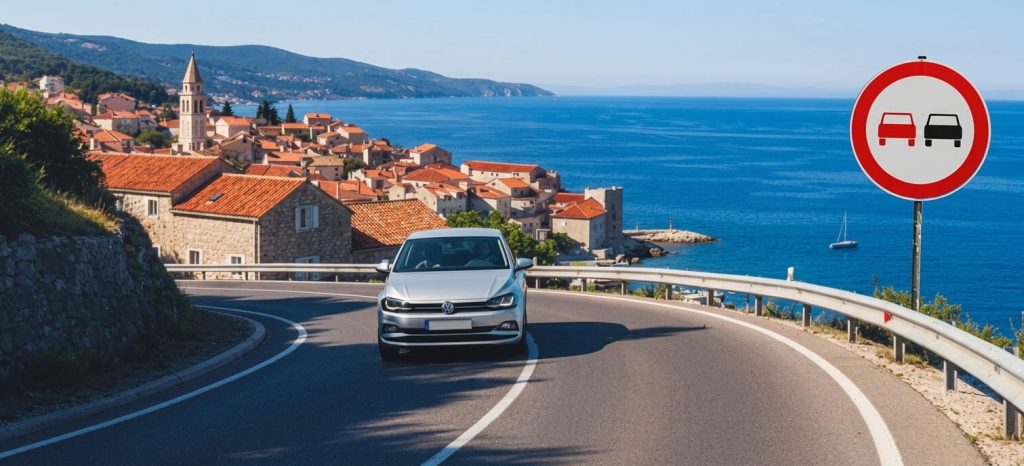
In Croatia, all vehicles are driven on the right-hand side of the road and are required to overtake from the left. It is also mandatory for all passengers and the driver to wear seat belts to ensure your safety. Penalties will be charged for any violations.
🍺 Alcohol & Driving Laws
Although the legal drinking age in Croatia is 18 years, drivers under the age of 24 must ensure a zero blood alcohol level, exceeding which can lead to serious penalties or licence suspension. A maximum BAC limit of 0.05% may be acceptable for standard drivers in some locations; however, it is best to avoid drinking entirely if you plan to drive.
👶 Children and Baby Seats
A proper child safety seat is compulsory in Croatia for children under 135 cm or below the age of 12. In addition, they cannot sit in the front seat, and if a child seat is secured in the front, the airbags must remain deactivated. Children over 12 and taller than 150cm may use a regular seat belt.
📵 Mobile Phone Usage
All drivers are prohibited from using a phone while driving. They may use a hands-free or Bluetooth device to take calls, and the built-in dashboard screen in the car for navigation and other features. They cannot hold a device or wear two earphones at the same time, as it is also considered a traffic offence.
💡 Headlights
Croatia has many tunnels, some stretched across several kilometres, driving through which requires you to keep the car’s headlights on. This is especially mandatory for driving from October to March due to the limited visibility even in daylight.
🛣️
Types of Roads in Croatia
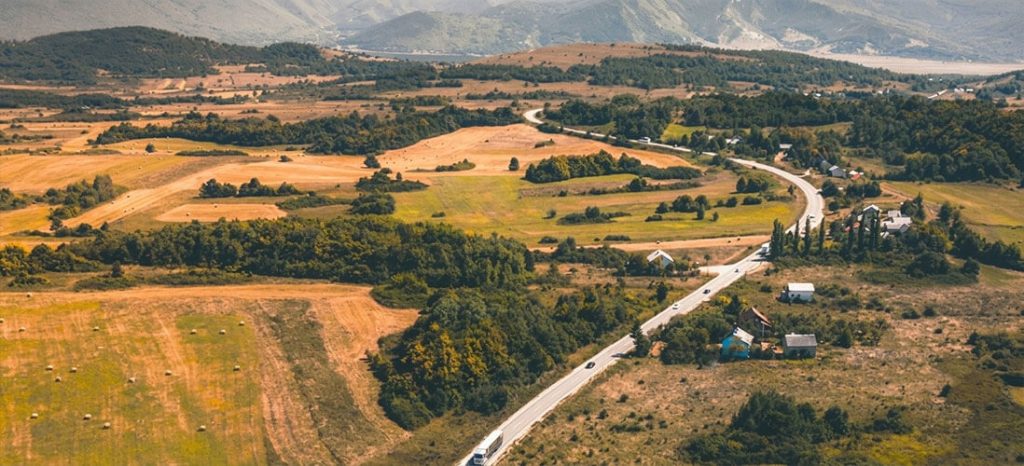
Exploring Croatia’s diverse landscape requires travellers to familiarise themselves with the different road types, including highways, coastal routes, rural byways, and city streets. Having an idea of what to expect can help them plan a safer journey and hassle-free drives during their visit.
| Road Type | Markers / Names | Speed Limit | Notes |
|---|---|---|---|
| Highways (Autoceste) | A1, A6, so on. | 130 km/h | Tolled, well-maintained and ideal for long-distance travel. Stops for rest and offers quick cross-country drives. |
| State Roads (Državne Ceste) | D1, D8, and others. | 80-90 km/h | Connect cities and tourist destinations, along with scenic coastal and mountain routes. Narrow and winding conditions at times. |
| County & Local Roads (Županijske / Lokalne) | Ž followed by a four or five-digit number | 50-80 km/h | Often single-lane and sometimes gravelled or unpaved. Extra caution is needed when driving in rural or village areas. |
| Urban / City Streets | Vary by area | 50 km/h | Driving and parking in crowded historic centres like Zagreb or Split can be challenging. |
| Coastal & Island Roads | A1 motorway, D8 (coastal sections), local island roads | 50-80 km/h | Scenic coastal routes and islands. Winding cliffs and sharp turns, and may require ferry crossings. |
| Mountain / Rural Roads | Various | 50-80 km/h | Paved but steep and winding roads. Winter tyres or snow chains are required in winter. Slow down or avoid nighttime driving due to possible wildlife crossings. |
⛽ Fuel Stations
Planning your stops for rest and refuelling in advance is necessary, regardless of your chosen route, since petrol stations can be limited or located far from each other. For this, Croatia’s national driving club, Hrvatski autoklub (HAK), provides updated information on traffic flow, road works, and gas or EV charging stations on various routes. You can use their dedicated app to locate fuel stations, tolls, and weather advisories for your selected route.
⚡
Charging an Electric Vehicle (EV) in Croatia
Charging stations in Croatia are as common as electric vehicles. Over 1000 charging stations are available at petrol stations, public car parks, and marketplaces, allowing you to enjoy a hassle-free journey. Multiple city locations and major highways also offer an interconnected network of EU’s e-charging points, whether you need one for driving a rental car or your own. Since many hotels and accommodations provide free charging for guests, you can check if yours does as well.
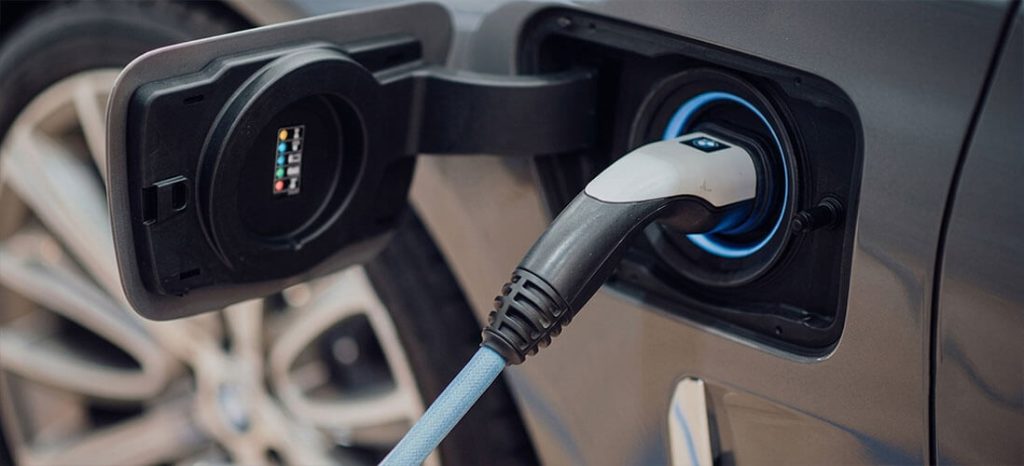
You can install ELEN, IONITY, or PlugShare apps on Android and iOS devices to locate EV charging stations near you. Standard charging prices range from $0.29 to $0.58 per kWh and often vary by service provider. Although supercharges can cost anywhere between $0.52 – $0.64 per kWh.
🅿️
Parking Rules in Croatia
A systematic parking system is offered throughout Croatia; the rules may slightly vary by location and zone. A couple of standard rules to keep in mind before parking include:
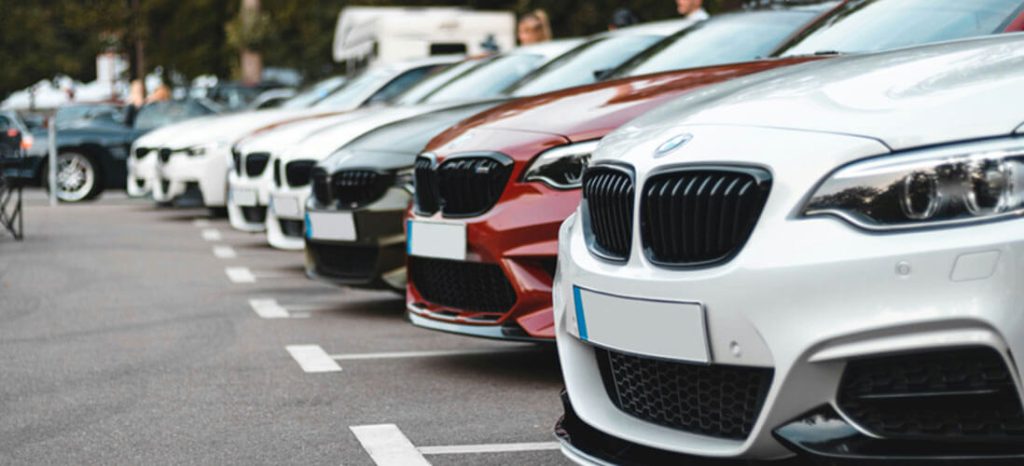
- Each parking zone is colour-coded by parking type in most cities, including Zagreb, Split, Zadar, and Dubrovnik. For that, a Red Zone (Zone 1) provides short-term parking at a higher rate, whereas the cheapest and full-day parking can be availed in a Green Zone (Zone 3). Additionally, Yellow Zones (Zone 2) allow longer stays at average prices.
- Blue-lined parking areas are reserved for drivers with a valid disability permit. Avoid parking here illegally; otherwise, you will be charged heavy fines.
- Depending on the parking zone, you can pay by coins, credit/debit card, or by SMS to a designated number. Please note that the SMS service is available only for locally registered numbers.
- You can pay via on-site parking meters, follow the instructions on the signage and Kiosks, or use dedicated apps to park your vehicle.
- Though street parking is another convenient option, it is ideal for short stops and is charged by the hour.
- Parking at most attractions is occupied quickly, especially during peak seasons, so it is best to arrive early to secure a spot.
⁉️
Frequently Asked Questions
1️⃣ On what side of the road should you drive in Croatia?
You must drive on the right side of the road in Croatia and overtake from the left. This is similar to most European countries, except the UK and other selected countries.
2️⃣ Can I drive in Croatia with a UK driving licence?
Yes, travellers with a valid UK driver’s licence can drive for short stays in Croatia. However, those with paper driving licences are required to carry an International Driving Permit (IDP) instead.
3️⃣ Is driving in Croatia difficult for tourists?
No, driving in Croatia is easy and safe for tourists. Roads are well-kept with clearly indicated bilingual signposts. Some of the older cities, such as Dubrovnik and Split, have narrow streets and limited parking, but those familiar with European driving standards will find it quite straightforward to drive on Croatian roads as well.
4️⃣ Are Croatian highways toll-free?
Most of the Croatian highways are toll roads and are marked with ‘A’ (for example, A1, A3, …). Tolls are charged based on the distance travelled, and you can pay using cash, credit/debit card, or an ENC device at the booth.
5️⃣ Do I need an International Driver’s Licence to drive in Croatia?
The need to have an International Driver’s Licence (IDL) while driving in Croatia depends on your original domestic licence. While EU/EEA drivers can use their national licence, non-EU drivers must possess an IDL (also known as an International Driving Permit) to drive in Croatia.
6️⃣ Is it safe to drive at night in Croatia?
Yes, but one must exercise caution. Most highways are well-lit and safe to drive, but remote and coastal routes may have sharp bends with limited lighting and reduced visibility. If possible, avoid nighttime driving for longer distances and on unknown roads. And keep the headlights on, especially during the mandatory period between October and March.